The Unlinked Booster: A Sponsor-Page Audit for US High School Athletics
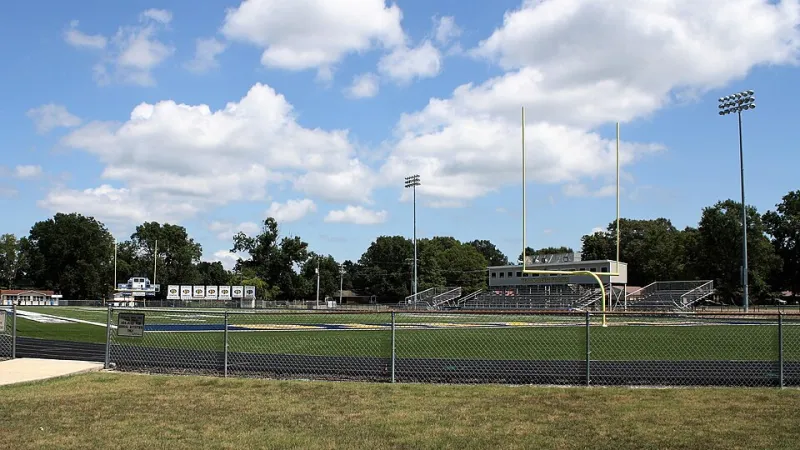
Photo: Brandonrush, CC0, via Wikimedia Commons
Local sponsorship is one of the few marketing investments that carries both community goodwill and search value. A US brand that sponsors a high school football program, a marching band, or a booster club fundraiser is usually acknowledged somewhere on a school-affiliated page. The problem is that the acknowledgment is often a logo image with no hyperlink, a name in a PDF, or a plain-text mention buried beneath a season schedule. For search visibility, that is a citation without a connection.
At SkyBacklinks, we treat these pages as a distinct link-auditing category: high-trust local citations maintained by volunteers, athletics directors, and district communications staff. The work is not glamorous, but it is repeatable. The following framework shows how to identify target schools, capture sponsor-page evidence, score missing links, and approach school stakeholders without turning a community relationship into a compliance problem.
Why booster pages become link deserts
Most booster club and athletics department pages are not managed by SEO teams. They are updated by volunteers who inherit a content management system, a logo folder, and a list of sponsors from the previous season. When a sponsorship renews, the logo may be swapped while the hyperlink disappears. When a page moves to a new district template, external links may be stripped for security reasons. When a sponsor list is published as a PDF, search engines can read the text but cannot follow a link that was never there.
None of this is malicious. It is a maintenance gap. That gap creates an audit opportunity: the brand has already earned the mention, but the page has not yet made the mention machine-readable.
Define the audit universe before collecting URLs
Start with a geographic filter rather than a random list of schools. Build three tiers: districts inside the brand's current service area, districts in adjacent metros where the brand plans to grow, and districts tied to existing customer or employee relationships. This keeps the audit tied to local search relevance instead of raw page count.
Useful source pages include district athletics hubs, individual school athletics pages, booster club and touchdown club sites, school foundation sponsor pages, and state high school association directories. Search operators can accelerate discovery: site:.k12.[state].us with terms such as sponsors, booster club, athletic sponsors, and touchdown club. Add local news coverage of sponsorship drives, because articles often point to the school page that lists donors.
Record the district, school, page type, sport or program, and the sponsor name as it appears. Do not rely on a single crawl. Booster pages are seasonal, and a page that is empty in July may be populated in September.
Capture evidence in a consistent schema
A sponsor-page audit is only useful if the data can be compared across schools. Use a schema that captures the page URL, page type, sponsor display form, link status, destination URL, rel attribute, placement tier, season, last-updated signal, public contact, and a local relevance score. Link status should distinguish between linked, unlinked text, unlinked image, broken link, nofollow link, and redirect.
Take a timestamped screenshot or PDF of each page. Volunteer-managed sites change quickly, and evidence prevents a later dispute about whether a link ever existed. If the page is a PDF, save the file and note the page number where the sponsor appears. If the sponsor appears in a logo carousel, note whether the carousel is rendered in HTML or loaded by a script; a script-loaded logo may be invisible to a crawler even when it is visible to a visitor.
Score opportunities by more than domain authority
A simple weighted model keeps the audit honest. Allocate roughly 25 points to page authority, 25 to local search relevance, 20 to sponsor prominence, 15 to link feasibility, and 15 to maintenance risk. Page authority can be approximated with site-level authority and page depth; a sponsor page linked from the athletics hub is usually stronger than a buried subpage. Local relevance should reflect overlap with the brand's service area and the school's draw across surrounding towns.
Sponsor prominence matters because a top-tier placement is more likely to be maintained and more likely to send referral traffic. Link feasibility reflects whether a public contact exists and whether the page appears to accept external links. Maintenance risk rises when a page is managed by a volunteer board with annual turnover. The output is a ranked list, not a moral judgment about which schools deserve support.
Run an outreach sequence that respects school governance
Start with proof. Confirm the sponsorship invoice, renewal letter, or program agreement before asking for a change. Then contact the booster club president and the athletics director in the same message, naming the exact page and the exact sponsor listing. Offer a current logo file and the preferred destination URL. Keep the request narrow: add a hyperlink to the existing sponsor name or logo where district policy allows.
Follow up after seven to ten business days. If the booster club does not control the page, ask for the district communications office. Do not offer payment for a link, and do not ask a volunteer to violate a district policy. Some districts apply nofollow to all external links; in that case, record the citation value and move on. The goal is a durable, policy-compliant link, not a workaround.
Put the audit on a seasonal calendar
High school athletics run on a predictable rhythm. Audit fall sports pages in late August and September, winter sports pages in November and December, and spring sports pages in March. Booster board turnover often happens in late spring or early summer, so a renewal check before the fiscal year closes can catch links that will otherwise disappear. Re-crawl the highest-value pages quarterly and log every change in the same ledger used for other referring domains.
In 2026, the most useful local link audits are not the ones with the largest spreadsheets. They are the ones tied to real community relationships and maintained after the first request. A booster page that links to a local sponsor is a small piece of infrastructure, but it is exactly the kind of durable local citation that compounds when it is audited, requested, and renewed season after season.